
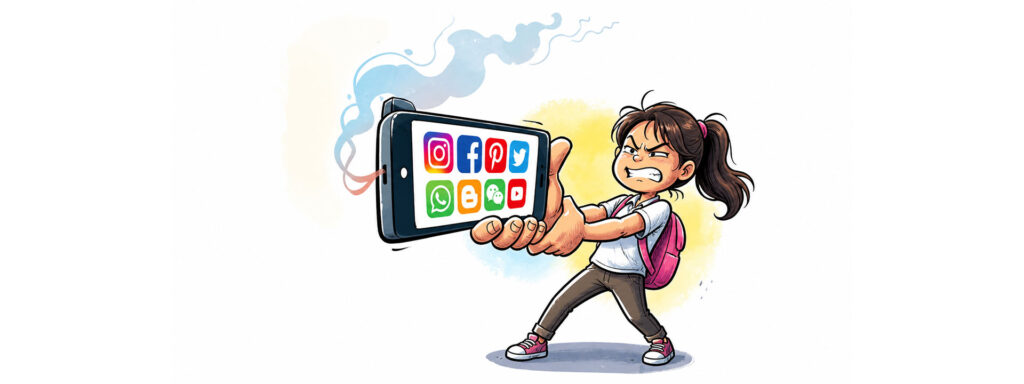
Some time ago, I met a girl who was about 14 or 15 years old. She came from a lower-income background, growing up in an environment that offered little positive influence. When I spoke with her, she expressed a sincere desire to study and build a better future through education.
Just five or six months later, I came across an Instagram Reel that left me stunned. It was her. After confirming with others, there was no doubt—it was the same girl. In the video, she was proudly brandishing an illegal weapon.
What changed?
This is not an isolated case. Anyone who scrolls through Instagram or similar platforms will encounter countless examples of children drifting toward dangerous behaviors in pursuit of attention.
So what causes a child—once hopeful and focused—to take such a sharp turn?
The answer lies largely in influence. Children are deeply shaped by their surroundings, and today, social media has become one of the most powerful forces shaping their decisions. While it can inspire creativity and learning, it also exposes young minds to harmful trends and distorted realities.
Short-form content, like 15–20 second Reels, encourages users to present exaggerated, often unrealistic versions of themselves. Every child wants to be seen as a “hero” on their profile. They post, refresh, and obsess over likes and views. Gradually, many begin to imitate what they see—adopting a “fake life” that prioritizes attention over authenticity.
This shift is not harmless. It becomes dangerous when validation turns into addiction. In the race for visibility, children may cross ethical and legal boundaries—risking their safety and future for fleeting online approval.
The girl I met is just one example. Across platforms like Instagram and Facebook, many children engage in reckless acts: hanging
out of moving vehicles, performing risky stunts, or creating inappropriate content—all to appear “cool” in a 20-second clip.
This raises an uncomfortable question: where are we failing? Are families, schools, and society doing enough to guide children? Or have we handed them a powerful tool without preparing them to use it responsibly?
Social media was created with positive intentions, but like any powerful tool, it carries risks. Ignoring those risks is no longer an option.
It is time to act.
Should we implement stricter age regulations, as some countries have done? Should platforms be held more accountable? While banning social media entirely may not be realistic, guiding its use certainly is.
Families, educators, and communities must work together to raise awareness about its impact. Children need mentorship, boundaries, and digital literacy—not just access.
Because the real question is not whether social media will influence children—it already does.
The real question is: will we shape that influence, or let it shape them?